I went to my local market yesterday for only coffee and eggs. At the register, my receipt seemed to enter witness protection. It was a total mystery.
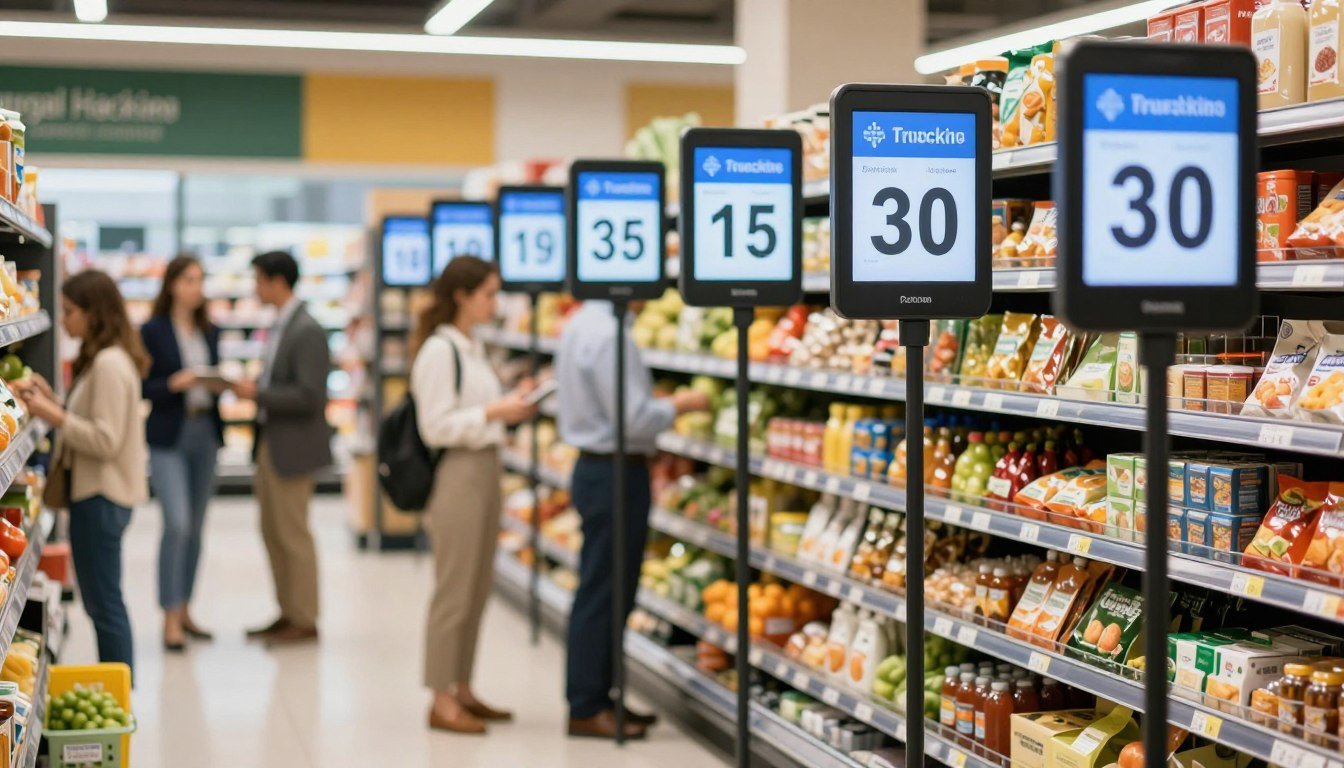
We are not dealing with wild, rideshare-style surges. Instead, digital price tags and electronic shelf labels with dynamic pricing in grocery stores create a quiet, steady rise in costs. These systems update prices fast, making small hikes hard for shoppers to notice.
Retailers now use loyalty data to raise prices while you browse. This is not a dramatic “gotcha” moment, but a slow drain on your wallet. To stay ahead, shop early, check app prices, stop tracking, and compare unit costs.
Key Takeaways
- Retailers use automated systems to update costs instantly without manual labor.
- Loyalty programs often feed data into these systems to influence what you pay.
- Scanner-accuracy laws keep checkout totals honest, but shelf costs remain fluid.
- Always check the fine print on unit costs to spot hidden increases.
- Taking control of your data and shopping habits is the best defense against these tactics.
A Morning Grocery Trip That Reveals the Digital Price Trap
Let’s be honest: nobody visits a supermarket to perform a forensic audit on cereal. We all know our usual staples, but lately that list costs much more than it used to. This is not only inflation; it is a subtle, digital game of cat and mouse.
Case Study: How the Same Shopping List Can Cost More Without an Obvious Price Increase
I tracked my standard haul to find where money was leaking. I compared the shelf tag with my final receipt, and the results surprised me. These grocery price changes often hide in plain sight beneath layers of “convenience.”
Track Shelf Prices, Checkout Totals, App Offers, and Package Sizes
To investigate, I conducted a small grocery-shopping case study. I noted the shelf price, checked the app for “exclusive” offers, and watched the package weight. This table shows how tiny differences add up during one trip to the grocery store.
| Item | Shelf Price | Register Total | Discrepancy |
|---|---|---|---|
| Oatmeal | $4.50 | $4.70 | +$0.20 |
| Coffee | $8.99 | $9.25 | +$0.26 |
| Yogurt | $1.25 | $1.25 | -2 oz size |
Why Shoppers Often Miss Small, Repeated Changes
Why does this happen? We are creatures of habit, and stores know it. We trust shelf prices, but shelf price accuracy is not guaranteed.
“The greatest trick the retail industry ever pulled was convincing us that our memory of last week’s prices is more reliable than the fine print on a digital tag.” — Anonymous Shopper
Fatigue, Habit, and Trust in Familiar Grocery Aisles
Shopping is tiring, and most people want to leave quickly. We use muscle memory in the aisles, so minor changes in grocery prices can go unnoticed.
When you are tired, you are not checking for shelf price accuracy; you are seeking the exit. That lack of attention lets small, repeated increases go unnoticed for months on end.
Digital Price Tags / Electronic Shelf Labels: Dynamic Pricing in Grocery Stores
If you think your grocery store only sells milk, look closer at the tiny screens replacing dusty paper tags. We are seeing a major shift in retail technology that changes how we choose items for our carts.
How Electronic Shelf Labels Replace Traditional Paper Tags
Teenagers no longer need pricing guns to replace paper stickers throughout every aisle. Those screens are electronic shelf labels, linked to central software that controls the entire store.
Centralized Retail Software, Wireless Updates, and Store-Level Price Automation
With price automation, a manager can change prices for a thousand items with one click from a back-office computer. Wireless updates keep shelf prices aligned with register prices, at least in theory. This seamless process helps the store run with little human intervention.
Why Retailers Invest in Real-Time Pricing Updates
Retailers value this technology because it cuts labor costs. Staff can handle other tasks while the system manages dynamic pricing across the store.
Store Efficiency, Labor Savings, Promotion Management, and Inventory Control
Beyond saving time, these systems enable instant promotions and better inventory control. If a product nears its expiration date, the store can automatically lower its price before it becomes waste. This store efficiency helps the bottom line but creates a new reality for shoppers.
“The speed of information is now the speed of commerce; if you aren’t watching the shelf, you’re already behind.”
| Feature | Paper Tags | Digital Labels |
|---|---|---|
| Update Speed | Slow (Manual) | Instant (Wireless) |
| Labor Cost | High | Low |
| Accuracy | Prone to error | High precision |
| Pricing Flexibility | Static | Dynamic |
Why Faster Updates Change the Shopper’s Risk
The real issue is that real-time pricing updates can make yesterday’s price different today. Shopping is no longer static; it is a changing digital marketplace.
The Narrow Window Between a Catalog Update and a Shopping Trip
A central catalog update can happen shortly before your morning grocery trip. Because digital price tags may update overnight, your expected price for staple items can become outdated before you grab reusable bags. It feels like chasing a train whose departure time keeps changing as you walk to the station.
What Grocery Stores Are Not Doing: The Limits of Surge Pricing
If you fear a high-stakes surge-pricing game at your grocery store, this news may lower your blood pressure. Your favorite snacks will not suddenly cost twice as much simply because Friday night is busy.
Why Grocery Pricing Is Not the Same as Rideshare Surge Pricing
Unlike an airport ride, where rain can raise the price, grocery stores follow different rules. They do not constantly change prices based on the number of shoppers in the aisles.
Demand Spikes Do Not Automatically Permit Checkout Price Changes
Retailers focus on store efficiency rather than squeezing every penny from shoppers during lunch rushes. They use dynamic pricing to manage inventory, but crowds do not trigger a price increase.
Shelf-Tag Accuracy Laws and Register Verification
Actual scanner-accuracy laws protect your wallet. These rules generally require the shelf price to match the register price.
What the Displayed Price Should Mean at Checkout
Those fancy electronic shelf labels should act as a promise. If one says $3.99, the computer should charge $3.99, except during store-wide sales or with digital coupons.
| Feature | Rideshare Surge | Grocery Pricing |
|---|---|---|
| Primary Driver | Real-time demand | Inventory/Margin goals |
| Price Visibility | Dynamic/Hidden | Shelf-labeled |
| Regulatory Oversight | Minimal | Strict accuracy laws |
Where the Real Consumer Problem Begins
The real headache is not a secret algorithm designed to ruin your budget; it is the speed of digital updates. Information now changes faster than we can process it.
Rapid Updates, Digital Personalization, and Difficult-to-Read Information
A few issues make shopping feel like a minefield:
- Rapid Updates: Prices can shift overnight, leaving you confused by the time you grab your morning coffee.
- Personalized Pricing: Loyalty apps might show you a different price than the person standing next to you.
- Tiny Information: The fine print on those digital tags makes it nearly impossible to quickly compare unit costs.
It is not surge pricing; personalized pricing and the complexity of modern retail create the challenge. You are fighting a data battle, not facing only a simple price tag.
How Overnight Price Automation Changes the Store Before Breakfast
Walking into a grocery store at dawn can feel like entering a place changed while you slept. The store may seem static, but price automation works behind the scenes. By your first coffee, the aisles may show a silent digital transformation.
What Can Change During an Overnight Catalog Update
While the store is empty, the central server sends a massive wave of data. These overnight grocery price changes can affect milk prices and the prices of your favorite snacks.
Regular Prices, Promotions, Loyalty Offers, and Product-Level Rules
The system changes more than the base price. It updates digital price tags for promotional windows, loyalty discounts, and product-level bundling rules. A “Buy One, Get One” deal may vanish, or a loyalty offer may no longer apply to your specific account.
Why Early Shoppers May See a Different Promotional Environment
If you shop by habit, you may have a mental map of each price. However, electronic shelf labels can quickly make that map outdated. Early shoppers may see promotions unlike those from the previous afternoon.
Comparing a Freshly Updated Shelf With Yesterday’s Shopping Plan
You may bring a list based on yesterday’s prices, only to find different prices on the shelves. This is the reality of real-time pricing updates. The store resets its financial baseline before the first customer reaches the produce section.
“The most dangerous phrase in the language is, ‘We’ve always done it this way.’ In the world of digital retail, that phrase is a one-way ticket to overpaying.” — Anonymous Shopper
The Case Study Signal: A Price Change That Looks Ordinary
Sometimes, a price change is so small that it feels like a memory glitch. You see a price, decide it looks “about right,” and place the item in your cart. The system relies on this reaction to prevent questions about the change.
Use Receipts and Photos to Document What Changed
To fight back, treat your shopping trip like a detective mission. Take a quick photo of the shelf tag and keep your receipt for later comparison. With physical evidence, an “ordinary” price change becomes a documentable event rather than a vague feeling of déjà vu.
| Change Type | Impact on Price | Visibility |
|---|---|---|
| Regular Price | Moderate Increase | High |
| Loyalty Offer | Discount Removal | Low |
| Promotional Bundle | Rule Modification | Medium |
How Loyalty Tracking Can Reduce Discounts on Habitual Purchases
Does your grocery app seem to know you too well? It is not your imagination. Modern retail technology turns weekly errands into valuable data while you seek almond milk deals. Meanwhile, the store builds a profile of your life.
What Grocery Apps Can Learn From Repeated Purchases
Each time you scan your loyalty card or open the store app, you share a map of your kitchen. The system records what you buy, how often you buy it, and brands you always choose.
Shopping Frequency, Favorite Brands, Store Visits, and Digital Coupon Use
The algorithm uses your shopping frequency and store visits to predict when you will need coffee or detergent. If you use a grocery app to track and clip coupons for specific items, the store learns your price sensitivity. It knows which brands you buy at any price and which need discounts to draw you in.
Why Habitual Buyers May Stop Seeing the Best Available Offer
Here is the catch: stores have less reason to offer deals when they know your habits. Why discount your favorite cereal if you will buy it anyway?
The Difference Between Broad Promotions and Personalized Discounts
The gap between a store-wide sale and personalized discounts is large. Broad promotions bring everyone through the door, while loyalty pricing often raises profit from your habits. You might stop seeing the best prices on staples because the system sees you as already “locked in” to them.
Separating Personalization Claims From Provable Price Differences
It is easy to assume that any display using electronic shelf labels changes just for you. Still, separate suspicion from a price difference you can prove. Not every price shift targets your wallet; some result from standard inventory management.
Compare Identical Items Without Assuming Every Price Is Individually Set
Before blaming a tiny algorithmic villain, do a quick check. Compare an item’s app price with its physical store tag. A difference might be a simple error, not a grand conspiracy.
| Promotion Type | Target Audience | Goal |
|---|---|---|
| Broad Promotion | All Customers | Increase Foot Traffic |
| Loyalty Pricing | Frequent Shoppers | Maximize Margin |
| Personalized Discounts | Individual Users | Influence Specific Habits |
Understanding how electronic shelf labels and loyalty pricing interact is your best defense. Check your receipts and do not let app convenience hide the actual cost of your groceries.
The Tiny Unit-Price Problem Behind Shrinkflation
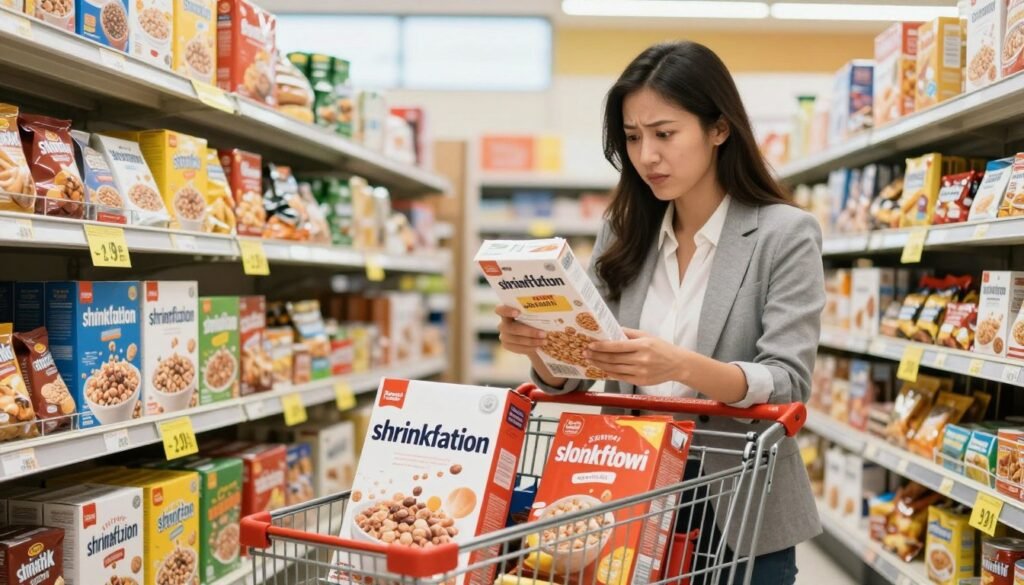
Have you ever felt your favorite cereal box is hiding its contents? You grab the same box, pay the same price, and go home. Then you find a smaller bag inside: the classic shrinkflation trap, happening in almost every aisle of your local grocery store.
How Package Sizes Change While Headline Prices Stay Familiar
Retailers know a fifty-cent price increase may make you reject a favorite snack. Instead, they make subtle changes to package sizes while keeping the headline price familiar. This marketing tactic keeps you buying while the product’s supply slowly dwindles.
Fewer Ounces, Fewer Counts, and Smaller “Family-Size” Products
The “family-size” label is often the biggest offender. You may get fewer ounces of chips, fewer granola bars, or fewer loads of detergent. Boxes and plastic jugs keep their shelf space, while manufacturers quietly reduce contents to protect margins.
Why Micro-Print Unit Costs Matter More Than the Big Number
To beat shrinkflation, stop watching only the large price and read the tiny text. The unit price shows what you pay for goods and cuts through marketing claims. It supports a trusted grocery value comparison.
Cost Per Ounce, Pound, Count, Load, and Other Comparable Measures
Whether you buy coffee or paper towels, check the cost per ounce, pound, or load. This small number shows the true cost, even when packaging changes. These standard measures reveal a bad deal, even when the price matches last month.
Recognizing Shrinkflation Without Relying on Memory
Your memory of a coffee bag’s price three months ago is not reliable evidence. We often misremember small price changes, so track spending another way. A better spending record can help you avoid being fooled.
Photograph Package Labels and Compare Net Quantity Over Time
The best defense is keeping your own digital log. Photograph package labels and net quantities when shopping for staples. Over time, this visual history can show whether your favorite items shrink, helping you make smarter choices for your household budget.
How Small Digital Price Changes Can Drain $1,000 or More Each Year
Have you wondered why your grocery bill feels like a slow-motion bank heist? You enter for a few essentials, then leave with a receipt that makes your wallet weep. This is not imagination; clever, automated systems are working against your bank account.
The Mathematics of Repeated Grocery Overcharges
Combine Weekly Increases, Smaller Packages, and Missed Discounts
A ten-cent hike seems small on one item. Yet repeated price increases across your cart add up quickly. Add smaller snack packages and missed loyalty discounts, and your finances take a serious hit.
This is modern price automation. Retailers use sophisticated software to change prices so often that you barely notice. Over the course of a year, these small changes can create a large hole in your budget.
Which Staples Create the Largest Annual Exposure
Coffee, Cereal, Dairy, Meat, Snacks, Household Goods, and Baby Products
The biggest risk comes from items you buy every week. Because you buy these staples automatically, price increases of a few cents can go unnoticed. Coffee, cereal, and dairy often lead, but do not overlook household goods or baby products.
These items drive your highest annual grocery costs because you need them. You cannot simply stop buying milk or diapers, and retailers know this. That creates a steady pattern of grocery overcharges that hits your wallet hard.
Why the Loss Is Hard to Notice in a Single Receipt
Measure Monthly Spending Instead of Judging One Shopping Trip
A single receipt cannot show the full picture. The system hides the immediate effect of dynamic pricing. Compare spending across three or six months to see the truth.
Do not judge financial health by one store trip. Track monthly totals to see whether your “essential” basket slowly becomes a luxury purchase. You may find you pay more for the same items bought last year.
| Expense Category | Weekly Impact | Annual Drain |
|---|---|---|
| Staple Groceries | $12.50 | $650 |
| Shrinkflation Items | $5.00 | $260 |
| Missed Discounts | $2.50 | $130 |
| Total Loss | $20.00 | $1,040 |
Shop Early Before Digital Price Changes Become a Distraction
Getting out of bed before sunrise may feel like a punishment, but it can help you avoid hidden price hikes. Most grocery stores run automated catalog updates overnight, so 7:00 AM prices are the freshest available. Shopping early helps you avoid the psychological pressure of tiredness, hunger, and crowded aisles.
Why Morning Shopping Can Improve Price Awareness
Review Freshly Updated Tags Before Fatigue and Crowds Set In
During peak hours, your brain turns into grocery-store oatmeal. You may grab items from habit instead of checking their actual cost. With early grocery shopping, you have the clarity to spot small price jumps retailers hope you miss.
Build a Short Early-Day Shopping Routine
Check Staples, Promotions, and Unit Prices Before Filling the Cart
Avoid wandering; build a quick, store efficiency-focused routine, then check your top five staples. Check the unit price before placing cereal or coffee in your cart. If a price looks wrong, switch brands or skip the item before the “cart-filling trance” begins.
When Shopping Early Does Not Make Sense
Balance Potential Savings Against Travel, Work Schedules, and Fresh-Stock Timing
Let’s be real: driving forty minutes to save fifty cents means losing the game. Balance your morning shopping savings with your commute and work schedule. Sometimes, stocking cycles leave shelves emptier in the morning.
The best markdowns on perishables may also happen right before closing time. If the early bird gets the worm but spends too much on gas, the worm is not worth it.
Verify App Rates Before Trusting the Shelf Label
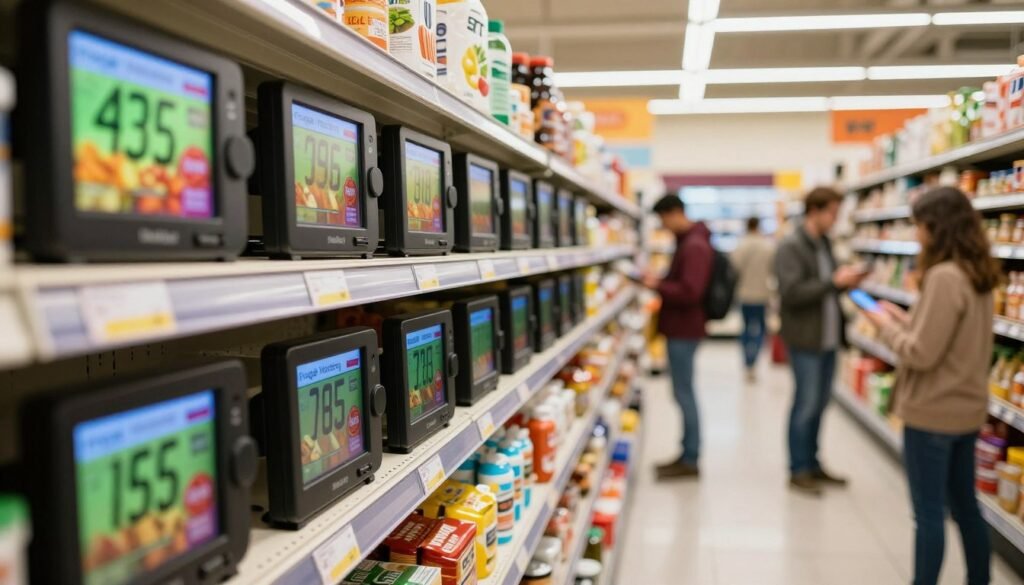
Learn how to avoid confusion from changing digital price tags. Your smartphone can help you check prices before paying.
Scan Staple Items in the Store’s Official App
Before placing cereal in your cart, open the store’s official app. Verify the grocery app’s prices before buying.
Search the Exact Product, Size, Flavor, and Pack Count
Do not scan the barcode and assume the match is correct. Check the exact item, including its flavor and pack count. A family-size item may not qualify for a deal listed for standard size.
Compare the App Price With the Electronic Shelf Label
With the app open, compare its price to the shelf price. If the real-time pricing updates differ from what you see on your phone, you’ve found a shelf-to-register mismatch.
Capture Screenshots of Conflicting Prices Before Checkout
Before checkout, photograph the shelf tag and capture the app price. This evidence can help if the scanner charges the higher price.
Claim a Lower Digital Price When the Store’s Policy Allows It
Most stores honor the lower price when a discrepancy appears. Bring the difference to a staff member’s attention.
Ask Customer Service or the Cashier to Apply the Correct Offer
Show your evidence and politely ask the cashier to adjust the total. Staff members often help when they see proof, especially if you stay calm about the shelf-to-register mismatch.
Check Whether a Digital Coupon Has Extra Conditions
A price difference may reflect the fine print rather than a glitch. Digital coupons can include conditions, such as saving $2 only after meeting certain requirements.
Review Loyalty Requirements, Purchase Limits, and Expiration Dates
Check whether you need loyalty membership and whether purchase limits apply. Also confirm the expiration date before checkout. Otherwise, a coupon could expire before you use it.
| Verification Step | Action Required | Why It Matters |
|---|---|---|
| App Scan | Check exact SKU/Size | Prevents size-based errors |
| Price Audit | Compare App vs. Shelf | Identifies pricing gaps |
| Evidence | Screenshot/Photo | Proves your claim |
| Coupon Check | Verify fine print | Avoids checkout surprises |
Kill Tracking by Limiting App Permissions and Store Connectivity
If your grocery app seems to know too much about your shopping habits, you are not paranoid. Modern retail technology can turn your smartphone into a beacon that sends your location and preferences to store servers. Take control of your digital footprint while you walk through the aisles.
Revoke Unnecessary Location Permissions
Your phone constantly broadcasts your location, and grocery apps are often major culprits. Limiting location permissions stops an app from tracking your exact path through the store.
Review iPhone and Android Settings for Grocery Apps
- On iPhone: Go to Settings, find your grocery app, tap “Location,” and select “Never” or “While Using the App.”
- On Android: Navigate to Settings, tap “Apps,” select the store app, and toggle off “Location” permissions entirely.
Disconnect From In-Store Wi-Fi When It Is Not Needed
Joining the store’s free Wi-Fi can be a trap. After you log in, you may give its in-store Wi-Fi tracking systems a map of your movements.
Use Cellular Data or Disable Automatic Network Connections
Using your own cellular data is safer while shopping. If you must use Wi-Fi, set your phone to never automatically join public networks. This step stops the store from linking your device ID to your shopping session.
Reduce the Data Trail Without Losing Essential Coupons
You do not need to delete your account to protect your privacy. You can still get digital deals without giving the marketing department your entire life story.
Keep a Basic Account for Receipts While Limiting Optional Tracking
Keep a basic account for receipts and essential coupons. In your profile settings, opt out of “personalized offers” or “data sharing” to limit harvested loyalty data. Less data means less ammunition for their dynamic pricing algorithms.
Understand What Privacy Changes Can and Cannot Do
These steps improve your digital hygiene, but they are not magic. Privacy settings can limit optional tracking, but they cannot rewind every price or turn the supermarket into a data-free farmers market.
“Privacy is not about hiding; it is about having the power to choose what you share with the world.” — Anonymous
Protect Personal Data Without Assuming Every Price Difference Will Disappear
Even with completely “dark” phone settings, the store uses grocery app privacy measures to track aggregate trends. You will still see price fluctuations based on the store’s overall strategy. However, limiting your data trail makes it much harder to target you with inflated prices based on your personal habits.
Audit Unit Cost Instead of Headline Prices
Your grocery bill can feel like a battlefield, but tiny print gives you a powerful tool. You see a huge “Sale” sign, grab the item, and place it in your cart without thinking. That is exactly what the store wants you to do.
Perform a unit-cost audit on every shopping trip to stop overspending. You do not need to be a math genius; you need to resist clever marketing.
Find the Micro-Print Cost Per Ounce or Count
Use the Shelf Label, Package Panel, and Calculator When Necessary
Look past the giant price tag and find the tiny text on the shelf label. This shows your cost per ounce or cost per unit. If the label lacks this figure, use your phone calculator to divide total price by net weight.
“Price is what you pay. Value is what you get.”
Do not let the store’s real-time pricing updates distract you from the math. If the numbers seem wrong, put the item back and keep walking.
Compare Equivalent Products on a Common Measurement
Normalize Different Package Sizes Before Calling One Option Cheaper
Retailers may place a 12-ounce box beside a 16-ounce box to confuse your choice. Compare both using a common measure, such as price per pound.
A grocery price comparison works only when you compare equivalent products. Never assume the “family size” costs less simply because it is bigger.
Switch to Store Brands When Staples Spike
Compare Ingredients, Net Quantity, and Quality Rather Than Branding Alone
When your favorite name-brand cereal or coffee becomes costly, consider another option. Store brands often come from the same facilities as major brands, without the large marketing budget.
Check the ingredient list carefully before buying. If quality is comparable, choose the generic option and save money. Your wallet will thank you at month’s end.
Spot Misleading “Value” Packaging
Watch for Multipacks, Bonus Claims, Club Sizes, and Promotional Bundles
Beware of the “value” trap. Giant multipacks and “bonus” bundles can cost more per unit than standard sizes. These packages depend on shoppers skipping the math.
- Check the unit price on the shelf tag.
- Ignore the “Bonus” or “Club Size” labels.
- Calculate the cost per serving yourself.
Record the Unit Prices of Frequently Purchased Staples
Create a Personal Reference List for Coffee, Milk, Eggs, Cereal, and Cleaning Products
The best way to spot a deal is to know what a “good” price is. Start a simple phone list for common items. When prices rise, you will know when to choose store brands or wait for a better sale.
Keep a unit-cost audit for your staple items to take control of shopping. You will stop guessing and shop with a plan.
Audit Your Spending and Stay Disciplined on the Next Trip
Let’s be honest: your grocery receipt may feel like a story you never agreed to read. A weekly bill is not always a simple exchange of money for food. Take control of your wallet instead of letting the store use price automation against you.
Review the Last Several Grocery Receipts
Separate Price Increases, Quantity Changes, Substitutions, and Impulse Purchases
Grab your last three receipts and study them like a mystery. Complete a thorough grocery spending audit to learn where your money goes. Did the same item cost more, or did its package shrink without notice?
Create a Pre-Trip Price and Quantity Checklist
List the Target Brand, Acceptable Store Brand, Unit-Cost Limit, and Maximum Quantity
Before entering the store, write down exactly what you need. A unit-cost limit helps you avoid “value” packs that cost more per ounce. This disciplined grocery shopping habit helps keep your budget under control.
Use a Cart Pause Before Checkout
Remove Items With Unverified Prices or Weak Value
Before checkout, take a breath and use a “cart pause.” Review each item and question every impulse buy or unexpected price. Return items with unverified prices because they may not be worth the cost.
Maintain a Simple Price Audit Log
Track Date, Store, Product, Package Size, Unit Cost, and Final Price
Start receipt tracking with a simple phone log. Record each staple’s unit cost to spot trends over time. Good data helps you notice price hikes before they surprise you.
Escalate Repeated Shelf-to-Register Mismatches
Save Receipts and Follow the Store’s Customer-Service or Consumer-Protection Process
If you continue to see shelf-to-register mismatches, do not leave without reporting them. Save your receipts and ask customer service to correct each error. Stores may count on tired shoppers staying quiet, so speak up.
| Strategy | Benefit | Effort Level |
|---|---|---|
| Receipt Auditing | Identifies hidden costs | Low |
| Pre-Trip Checklist | Prevents impulse buys | Medium |
| Cart Pause | Stops overspending | High |
| Price Logging | Tracks long-term trends | Medium |
Conclusion
You do not need to fear a robot uprising at your local Kroger or Safeway. Electronic shelf labels do not prove a grand conspiracy to drain your bank account. These systems are tools, and a solid grocery savings strategy can help you outsmart them.
Your best defense is simple: shop early to beat overnight price updates. Compare app rates with shelf tags, and demand the lower price if the register makes a mistake. Limit app tracking, keep your digital footprint small, and always check the unit cost on the shelf.
Grocers are not using rideshare-style surge pricing for your milk and eggs. Still, document any strange price jumps you find. Digital price transparency is your right as a shopper, and scanner-accuracy laws protect your wallet from human or machine error.
Your grocery budget rarely gets robbed during one dramatic, expensive trip. It usually loses money through tiny, forgettable changes. Watch your receipts and package sizes. Consistent grocery price protection keeps your hard-earned cash where it belongs—in your pocket.
FAQ
Are electronic shelf labels more accurate than paper tags?
Does every digital price tag mean surge pricing is happening?
How can I tell if a package has been affected by shrinkflation?
Should I use the store’s Wi-Fi while shopping?
What should I do if the register price is higher than the digital shelf tag?
Why do I stop seeing coupons for items I buy every week?