I once spent forty dollars on a “smart” water bottle that tracked my hydration. It sat on my desk, glowing like a tiny, judgmental alien, until I realized I had traded three hours of my life for a plastic container that beeped at me.
We often treat our earnings like loose change found under the couch cushions. We forget that every dollar represents a slice of our finite existence.
Learning how to calculate costs per hour worked is the ultimate mindset hack for stopping spending on things you don’t need. It turns a boring price tag into a tangible sacrifice of your freedom.
Adopting a frugal living mindset isn’t about deprivation; it is about reclaiming your schedule. By mastering intentional spending habits, you stop the slow leak of your bank account.
These psychological tricks to save money act as a shield against the marketing machine. Once you see the true price of your purchases, you finally learn how to stop lifestyle creep in its tracks.
Key Takeaways
- Time is a non-renewable resource, unlike the paper in your wallet.
- Every purchase is a trade-off for your limited hours on Earth.
- Reframing costs as “time spent” kills the urge for mindless consumption.
- Intentional living requires constant vigilance over your daily habits.
- You can reclaim your freedom by valuing your life over your possessions.
The Rising Trend of Time-Based Financial Literacy
Ever looked at your paycheck and thought, “I’m trading my soul for a fancy espresso machine?” It’s a common feeling when we start to wonder why we’re so tired. We’re realizing our hourly wage is a metric for our life energy.
We’ve always been told success is about our bank accounts or how much stuff we have. It’s the classic American dream: work hard, buy big, and then work even harder to keep up. It’s a never-ending cycle.
But a cultural shift is happening. More people are valuing freedom over material goods. Having a full closet is less satisfying than having a free Tuesday afternoon to hike.
This shift helps us break free from the cycle of working for things we don’t enjoy. We’re learning that time is the only currency that truly matters. When we see money as hours of our life, our spending changes.
It’s time to stop measuring success by our bank accounts. Let’s measure it by the hours we own. You can always make more money, but you can’t make more time. That is the ultimate truth the consumerist machine doesn’t want you to know.
How to Calculate Cost in Hours Worked for Every Purchase
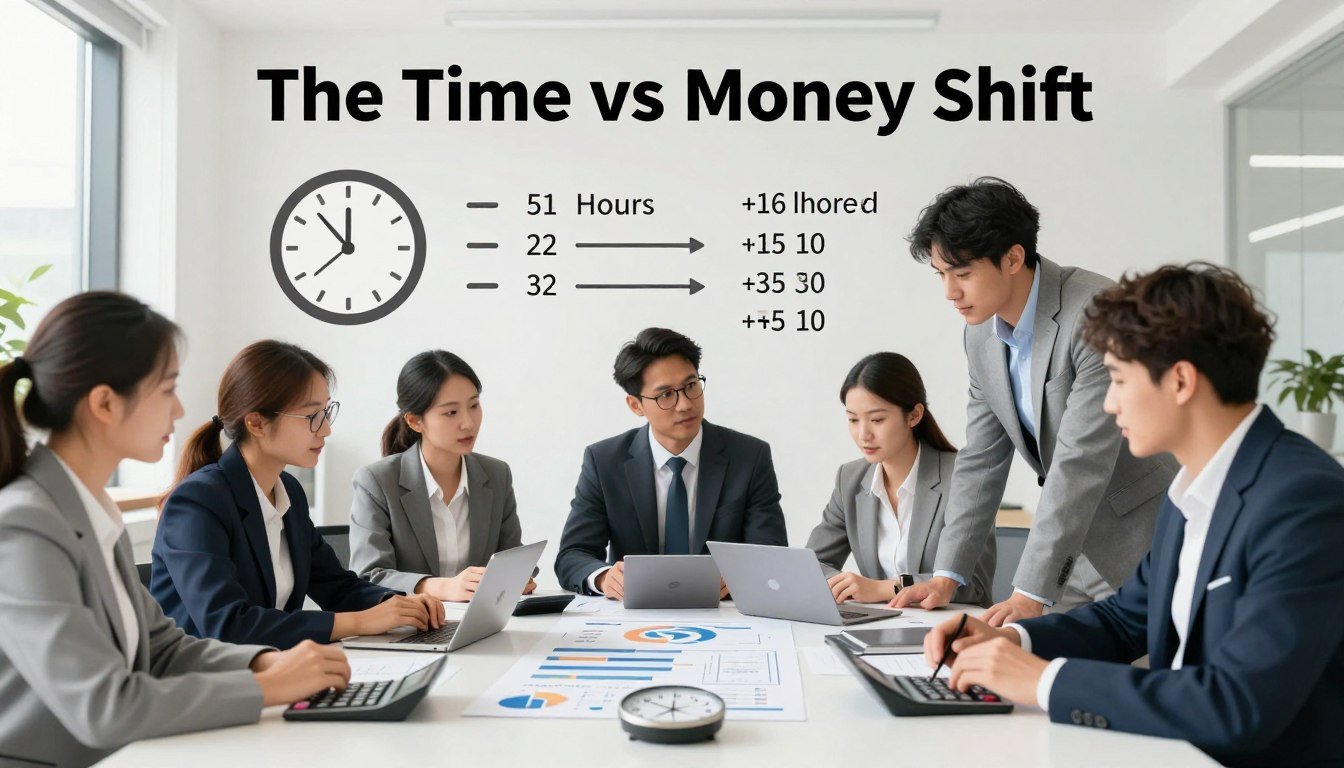
It’s time to stop just looking at prices and start thinking about time. Money is a physical representation of our limited time on Earth. Learning how to calculate costs based on hours worked helps prevent unnecessary spending.
The Formula for True Hourly Value
To start, find your real hourly rate. Look at your take-home pay after taxes, not just your base salary. Divide your annual net income by the hours you work each year.
If you earn $50,000 after taxes and work 2,000 hours, you’re worth $25 an hour. Seeing that $150 pair of sneakers means you’re trading six hours of your life for them. That “great deal” doesn’t seem so cheap anymore.
Accounting for Taxes and Hidden Labor Costs
When you add in job costs, the math gets even tougher. You’re not just working desk hours. You’re also paying for your commute, clothes, and lunches out.
When figuring out how to calculate cost in hours worked, include these extra hours. An hour-long commute each day adds to your total work time. Realizing a $100 gadget costs a whole day of your life makes it easier to save money.
The Psychological Impact of Viewing Money as Time
It’s amazing how quickly tapping your phone at the coffee shop can feel magical. Yet, it’s just trading your life force for caffeine. Today, money is invisible, turning our hard-earned cash into just pixels on a screen.
This digital change makes spending feel like a game. Without seeing physical bills, the emotional pain of spending fades. You might wonder where your paycheck went by mid-month.
Breaking the Illusion of Digital Currency
Modern banking apps and contactless payments aim to make spending easy. They want you to spend without thinking. This is a brilliant business model for them but bad for your savings.
When you swipe a card, your brain doesn’t feel the loss as it does with cash. You play a game where money seems endless, even though it’s not.
Why We Undervalue Our Own Labor
We often forget that every dollar in our account represents hours of work. We undervalue our labor because we see our paycheck as a single sum, not as a finite pool of life energy.
When you see money as time, your view changes. That expensive gadget doesn’t just cost two hundred dollars. It costs six hours of your life that you’ll never get back.
| Item | Price | Hours of Life Cost |
|---|---|---|
| Fancy Coffee | $7.00 | 30 Minutes |
| Streaming Subscription | $15.00 | 1 Hour |
| New Sneakers | $120.00 | 8 Hours |
| Weekend Getaway | $500.00 | 32 Hours |
Identifying the Silent Threat of Lifestyle Creep
Lifestyle creep sneaks into your budget, eating all your savings. It’s like a thief that takes your raises before you see them. To keep your finances in check, you must learn how to stop lifestyle creep.

The Hedonic Treadmill Explained
Ever feel like you’re running a never-ending race? That’s the hedonic treadmill at work. You get a raise, buy a fancy coffee machine, then a bigger car. Your “needs” grow to match your income.
We adapt to our surroundings, which helps us survive but hurts our wallets. Once you get used to luxury, it becomes your new normal. You lose the joy of the upgrade and feel pressured to keep up.
Recognizing Small Leaks in Your Monthly Budget
Most people don’t go broke from one big purchase. It’s the small, daily expenses that add up. These include the daily $5 latte or forgotten streaming services.
Be honest about what adds value and what’s just noise in your spending. To live a life that reflects your values, plug these small leaks before they drain your finances.
| Expense Category | Basic Need | Lifestyle Creep |
|---|---|---|
| Transportation | Reliable Used Car | Luxury Brand Lease |
| Morning Routine | Home-Brewed Coffee | Daily $7 Specialty Drink |
| Entertainment | Library or Free Parks | Multiple Premium Subscriptions |
| Dining | Cooking at Home | Frequent Food Delivery Apps |
Spotting these patterns is the first step to reclaiming your financial freedom. It’s not about living in poverty. It’s about choosing where your money goes, not letting it disappear.
Psychological Tricks to Save Money and Curb Impulses
Ever bought something at 2 AM and regretted it by breakfast? You’re not alone. We all have items we bought on a whim and never used. Using psychological tricks to save money can help you save instead of spend.
The Twenty-Four Hour Cooling-Off Rule
Stopping an impulse buy is simple: wait. When you see something you want, wait twenty-four hours before buying. This lets your rational side catch up with your impulsive one.
By morning, you’ll likely not want the item anymore. It’s a simple trick to keep your money safe.
Visualizing the Opportunity Cost of Luxury Goods
Another trick is to think about what else you could do with the money. Instead of seeing a $200 pair of sneakers, imagine a weekend trip or saving for emergencies.
Seeing the cost of luxury goods as an opportunity cost makes them less appealing. You’re not just spending money; you’re trading your future for a quick thrill.
| Spending Habit | Impulsive Approach | Intentional Approach |
|---|---|---|
| Decision Speed | Instant gratification | 24-hour waiting period |
| Value Assessment | Price tag only | Opportunity cost analysis |
| Emotional State | Driven by excitement | Driven by long-term goals |
| Outcome | Clutter and regret | Financial security |
By using these psychological tricks to save money, you take control of your finances. It’s not about being cheap; it’s about being smart with your money.
The Ultimate Mindset Hack to Stop Spending Money on Things You Don’t Need
We’ve all been there, eyeing something shiny we don’t need. It’s time to use the ultimate mindset hack to stop spending money on things you don’t need. Your current way is leading to clutter and empty savings.
Reframing Purchases as Life Energy Expenditure
Swiping your card means trading precious life energy. Think about the hours spent in a cubicle or dealing with annoying coworkers.
That’s the real cost of your purchase. Every dollar spent is a piece of your life you’ll never get back.
Seeing your bank balance as a reservoir of your own labor makes you more careful. You’ll stop asking if you can afford it and start wondering if it’s worth your time.
The Difference Between Value and Price
Price is what you pay, but value is what you get. Marketing makes us think high price means high quality.
But many expensive items offer zero long-term satisfaction. A fancy coffee maker used twice becomes a dust collector. You’ve paid a lot for little.
True value comes from things that save time, improve health, or bring joy. Before buying, ask whether it will still add value in six months or be clutter.
Frugal Living Mindset in a Consumerist Culture
Choosing a frugal living mindset is a bold move against a culture that pushes you to spend. Our society constantly tells us to buy more, making us feel our worth is in our purchases. It’s time to break free from this cycle.
Rejecting Social Pressure to Overspend
Keeping up with the Joneses is a losing battle. The Joneses are often drowning in debt to look successful. You don’t need to risk your financial future to impress people who are too busy to notice your new shoes.
True wealth isn’t about what you show off. It’s about freedom to choose your path and sleep well without debt. Choosing substance over status is the wisest choice.
“Simplicity is the ultimate sophistication.”
Finding Satisfaction in Non-Monetary Experiences
Real joy comes from free activities. A hike, a game night, or finishing a book brings more happiness than shopping. These moments create memories, not clutter.
With a frugal living mindset, “free” is no longer boring. It’s a chance to reclaim your time and energy. See how your view changes with the comparison below.
| Activity Type | Consumerist Approach | Frugal Mindset |
|---|---|---|
| Weekend Socializing | Expensive dinner and drinks | Potluck or park picnic |
| Entertainment | New subscription services | Library books or local trails |
| Personal Growth | Buying luxury gear | Learning a new skill online |
| Stress Relief | Retail therapy | Meditation or exercise |
A frugal living mindset is about being intentional. It’s about valuing your life more than a quick credit card purchase. You design your happiness, not advertisers.
Intentional Spending Habits for Long-Term Wealth
Most of us treat our money like it’s leaking out of a bucket. But it doesn’t have to be that way. Intentional spending habits mean making sure your money goes toward things that improve your life.

Prioritizing Assets Over Liabilities
To build wealth, stop buying things that lose value. Think of assets as seeds in your garden. They grow and give back over time. Assets like retirement accounts or tools that save you time are good examples.
Liabilities, on the other hand, drain your money. Things like expensive cars or unused subscriptions are anchors. By focusing on assets, you make your money work for you, not the other way around.
Creating a Spending Plan That Reflects Your Values
Many see a budget as a limit on fun. But a good plan is a roadmap to your goals. Intentional spending habits mean choosing what’s important and cutting out the rest.
First, think about what you really value. If travel is important, spend on that and cut back on takeout. Your spending should reflect your personal values, not random purchases. This way, you build the future you want without guilt.
The Role of Automation in Preventing Impulse Buys
Let’s be honest: your willpower is as reliable as a chocolate teapot when you see a “Buy Now” button. We think we’re rational, but our brains crave instant gratification. Using psychological tricks to save money is the only way to outsmart your impulses.
Instead of relying on willpower, let technology help. Set up systems that work in the background. This removes the need for constant decision-making. It’s a “lazy” strategy for building wealth.
Removing Friction from Savings
The goal is to make saving easy. If you wait until the end of the month, your bank account might be empty. You need to pay yourself first, automatically.
Set up an automatic transfer to move money into a high-yield savings account as soon as you get paid. By the time you think about it, it’s already gone—safely tucked away.
“The secret to wealth is not having more willpower; it is designing a life where you don’t need it.”
Adding Friction to Spending
We want to make saving easy but spending hard. If you save your credit card info online, it’s like giving your inner shopper a VIP pass. You need to create barriers that make you pause and think.
Here are a few ways to add friction to your digital life:
- Delete saved payment info: Make yourself get up and find your physical card every time you shop online.
- Unsubscribe from marketing emails: If you don’t see the sale, you won’t feel the urge to buy.
- Use a “cooling-off” app: Install browser extensions that block shopping sites for specific hours.
These psychological tricks to save money work because they break the cycle of mindless spending. When you manually type in your credit card number, your rational brain has a chance to catch up with your desires. Often, that extra minute is all you need to realize you don’t need that new pair of sneakers.
How Time-Based Accounting Changes Career Choices
When you start counting hours instead of dollars, your career choices change a lot. A big salary might look appealing at first. But when you see that time is your only non-renewable resource, the money doesn’t seem as important.
You’re essentially trading parts of your life for a paycheck. If you don’t account for the real cost of work, you might be getting a bad deal. It’s time to look at your calendar, not just your bank account.
Evaluating the True Cost of a Commute
That hour-long drive to work is more than just a commute; it’s a hidden tax on your life. Two hours a day in traffic means ten hours a week lost forever. That’s like working an extra month for free to sit in your car.
Think about the gas, the wear and tear on your vehicle, and the mental exhaustion. When you add those hours to your hourly wage, your effective pay rate drops a lot. Is the extra money worth the stress and missed sunsets?
The Trade-off Between Salary and Personal Freedom
We often chase high salaries because we think they mean success. But what if that job takes sixty hours a week, leaving you too tired to enjoy life? You might find that a lower-paying job with more freedom is more valuable.
True wealth isn’t just about money in the bank. It’s about having the freedom to choose how you spend your time. When you sign a contract, you’re trading your life energy for money.
Make sure the trade is worth it. Sometimes, the best career move is the one that gives you back your time.
Case Studies of Successful Financial Transformations
Reading about others’ success can motivate us to change our spending habits. It’s easy to feel trapped in debt, but real-life examples show change is possible. You don’t need to be a financial expert to manage your money. Just be intentional and use the ultimate mindset hack to stop spending money on things you don’t need.
From Debt-Driven Living to Financial Independence
Sarah, a graphic designer, once used her credit card as if it were endless. She was in deep debt until she changed her mindset. She started thinking about every purchase as a trade-off for her time.
She didn’t win the lottery or inherit a fortune. She just stopped buying things that didn’t fit her goals. In three years, she paid off $40,000 and started saving for her future.
The Impact of Small Shifts on Long-Term Savings
Skipping a daily latte or canceling unused streaming services might seem small. But these small changes can lead to big savings over time. It’s the power of intentional living that really adds up.
- Automated savings: Moving money before you even see it in your checking account.
- The 24-hour rule: Waiting a full day before making any non-essential purchase.
- Value auditing: Regularly reviewing your subscriptions to ensure they still provide actual joy.
These small changes can save thousands of dollars each year. By using the ultimate mindset hack to stop spending money on things you don’t need, you build a safety net. It’s not about giving up; it’s about choosing freedom over fleeting pleasure.
The Intersection of Minimalism and Time-Based Spending
Have you ever noticed that the more stuff you own, the more your stuff owns you? We often treat our homes like storage units for our past impulses. This overlooks the fact that every item incurs a hidden toll on your time.
Adopting a frugal living mindset means seeing your possessions as chores. When you stop buying things you don’t need, you save hours on cleaning, organizing, and repairing.
Decluttering Your Life to Save Your Time
Remember the last time you spent a whole Saturday moving boxes or dusting shelves? That wasn’t just cleaning; it was trading life hours for items that likely bring you no joy.
By decluttering, you get those hours back. A frugal living mindset isn’t about being cheap. It’s about being ruthlessly efficient with your life.
“The things you own end up owning you. It’s only after you lose everything that you’re free to do anything.”
Why Less Stuff Equals More Freedom
When you remove the excess, you free up mental space to focus on what’s important. You stop managing inventory and start managing your life.
Think about how your time changes with your consumption habits:
| Activity | High Consumption | Minimalist Approach |
|---|---|---|
| Cleaning/Maintenance | 5-7 hours/week | 1-2 hours/week |
| Shopping/Browsing | 3-5 hours/week | 0-1 hours/week |
| Free Time | Limited | Abundant |
Choosing to own less is the quickest way to gain freedom. A frugal living mindset lets you trade clutter for uninterrupted time. Stop letting your possessions control your schedule. Start investing in experiences that don’t need storage.
Overcoming the Fear of Missing Out on Trends
Ever feel like you’re racing to keep up with someone else’s perfect life on social media? You’re not alone. Social media makes it seem like everyone is always buying the latest gadgets, wearing designer clothes, and going on fancy vacations. It’s easy to feel left behind, but this feeling is often a trap that empties your wallet.
Learning how to stop lifestyle creep means understanding that trendy items are often just marketing tricks. Chasing these trends costs you money and time, and they quickly lose their appeal.
The Social Cost of Keeping Up
Trying to keep up with others is a never-ending task that brings only stress and financial loss. You might think buying expensive items will earn you respect, but it usually attracts the wrong kind of attention. Spoiler alert: those people aren’t worth the financial burden.
When you seek external validation over your financial well-being, you pay a steep price. Here are some common downsides of trying to keep up:
- The Debt Trap: Using credit cards for a lifestyle you can’t afford.
- The Comparison Fatigue: Feeling anxious because your life doesn’t match Instagram standards.
- The Loss of Autonomy: Working jobs you dislike to afford things you don’t enjoy.
Defining Your Own Version of Success
True freedom comes from focusing on your own goals, not what others are doing. Defining your own success is the best way to fight FOMO. It means being okay with not following every trend if it means you’re in control of your life.
To stop lifestyle creep, you need to know what truly brings you joy. Is it a fancy car, or is it the freedom to take a hike on a Friday? Once you know your core values, you’ll no longer feel pressured to follow societal trends.
Remember, you’re the only one who has to live with your financial choices. Stop chasing someone else’s dream and start building a life that feels fulfilling, not just looks good.
Tools and Apps to Track Your Time-Based Spending
Tracking your spending can be easy with the right tools. If you love data, you’ll enjoy seeing your expenses in terms of time. Learning how to calculate costs based on hours worked helps you control your spending.
Digital Trackers for Hourly Wage Conversion
There are amazing apps that make tracking easy. Apps like YNAB (You Need A Budget) or Google Sheets templates let you input your hourly wage. This way, you can see how many hours a purchase costs.
These apps give you real-time feedback. Seeing the hours a purchase costs makes you think twice. It turns money back into the time you worked for it.
Manual Methods for Mindful Budgeting
For a hands-on approach, you don’t need a subscription. A notebook or a whiteboard in your kitchen works great. Write down the price and divide it by your hourly rate to see the true cost.
This method adds a barrier to impulse buys. Writing down numbers makes you think before you buy. It’s a powerful habit that keeps you focused on your financial goals.
| Method | Effort Level | Best For | Primary Benefit |
|---|---|---|---|
| Budgeting Apps | Low | Data Nerds | Automated Insights |
| Spreadsheets | Medium | Customization Fans | Deep Analysis |
| Pen & Paper | High | Mindful Spenders | Maximum Friction |
The Future of Personal Finance and Intentional Living
If you think the future of money is just about bigger bank accounts, you might want to sit down. We’re moving away from endless accumulation and toward a smarter way of living. By adopting intentional spending habits, we can stop treating our lives like a competition to buy the most stuff.
Shifting from Accumulation to Optimization
We were taught that success means a garage full of stuff we rarely use. But the real goal is optimization, not just more stuff. It’s about spending every dollar to gain freedom, not just more things to maintain.
Think of your life as a limited-edition project. When you stop chasing trends, you can focus on what truly matters. This is the heart of intentional spending habits—choosing to invest in experiences that bring happiness, not clutter.
The Long-Term Benefits of a Time-First Mentality
When you see your money as stored life energy, your view of the future changes. You stop asking if you can afford something and start asking if it’s worth your time. This shift is a major stress-reducer.
Living with a time-first mentality means a life rich in moments, not just things. Your anxiety will drop when you stop trying to keep up with others. Freedom is the ultimate luxury, more satisfying than any gadget.
The future belongs to those who value time over possessions. By prioritizing peace of mind, you create a path to true wealth. It’s time to stop being a consumer and start being the architect of your own time.
Conclusion
We’ve explored the complex world of hourly wages and why we love new gadgets. You understand now that time is the only thing you can’t earn more of, no matter how hard you work.
Don’t treat your life like a sale at Target. Every dollar you spend takes away a piece of your life. Seeing purchases as life energy makes expensive things seem like a lot of hard work.
You have the power to be free. By stopping the chase for things that don’t make us happy, we break free from consumer culture’s hold.
Use your time wisely, as it’s a precious gift. Your future self will thank you for the extra hours you save today. Focus on what truly matters, because real wealth is the freedom to do what you want every day.
FAQ
What exactly is the ultimate mindset hack to stop spending money on things you don’t need?
Can you explain how to calculate cost in hours worked without making my head hurt?
Do you have any psychological tricks to save money for someone with zero self-control?
How to stop lifestyle creep when everyone else seems to be upgrading their lives?
How does a frugal living mindset actually lead to more freedom?
What are some intentional spending habits I can start today?