
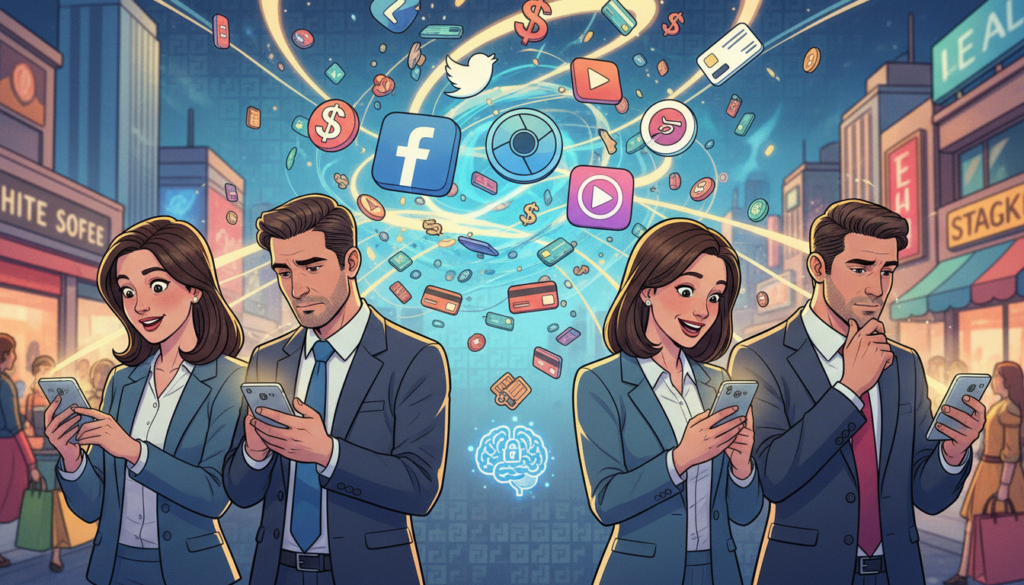
I swear I “just checked TikTok for a second.” Forty-seven minutes later I had a cart full of “life-changing” items and a $19 water bottle. Sound familiar?
When your wallet feels mysteriously light, it’s not always a budget problem first. Often your attention gets nicked long before your cash does — a slow leak you only notice when the ceiling stains.
Frugal hacking isn’t about living like a monk. It’s about choosing intention over impulse, function over style, and value over hype. That way you make decisions, not algorithms.
We’ll unpack the ad-driven model that turns time into revenue, and show simple guardrails you can actually keep. Expect real tactics: curating feeds, delaying buys, and adding friction so you stop biting every shiny thing.
This is not shame therapy. You are the hero. You get better defaults, small frictions, and a feed that stops acting like QVC with memes.
Key Takeaways
- Small clicks add up — time on platforms funds big ad revenues.
- Frugal hacking means systems that resist impulse triggers.
- Simple defaults create better financial outcomes over time.
- Curate feeds and delay purchases to reduce emotional buys.
- You don’t need shame — you need smarter friction.
Why Your Budget Breaks in a Viral World
A thirty-second clip rewires your brain to chase tiny hits, not long-term wins. That fast reward loop trains impulsivity. You tell yourself “one more” and suddenly your goals get benched by the highlight reel.
Short clips steal small chunks of time throughout the day. Those micro-moments add up. Over weeks, your focus frays and saving feels distant while impulse buys feel normal.
Fast entertainment also nudges your thinking from “I want this” to “I should buy this.” Algorithms rewrite preference into pressure. The result: tiny purchases stack into a monthly leak.
“Frequent use can harm financial health and amplify stress; 89% reported finances as a source of stress.”
- You get quick dopamine hits, then less brainpower for budgets or meal planning.
- Micro-distractions reduce the mental bandwidth needed to check your bank app.
- Stress plus scrolling becomes a loop that worsens financial worry.
The way out is simple: slow the feed, add friction, and protect blocks of focused time. Do that and the tiny buys stop surprising your balance.
What the Attention Economy Is and Why Companies Fight for Your Time
You called that app “free”; companies call it inventory: your minutes, served up as ad real estate. That simple swap—service for focus—is the whole business model.
Attention as a commodity
In plain English: you aren’t the customer, you’re the product. Platforms keep you scrolling so they can sell more ad slots. Think casino lights, but the jackpot is your gaze.
Algorithms, data, and targeted advertising
Algorithms learn tiny signals—pauses, hovers, repeat views—and build profiles. Then platforms serve ads that feel like mind reading. That precision is powered by data and real-time auctions where milliseconds decide which ad wins your eyes.
Scale matters
This isn’t small-time selling. Global digital ad revenue was roughly $567B in 2022 and could top $700B by 2025. Alphabet pulled in about $224B from ads, Meta about $117B. Big players win big slices of that pie.
“If the system profits when you’re impulsive, your budget is literally up against a business model.”
- Result: platforms optimize for clicks, not your goals.
- Outcome: more impulses, less autonomy over purchases.
How Social Media Platforms Turn Scrolling Into Spending
A fifteen-second clip can quietly turn curiosity into a cart full of things you didn’t plan to buy. The pipeline is built so you never pause to think.
Frictionless checkout that tricks your brain
Watch a product, tap a link, cart auto-fills, payment is saved — purchase complete. Frictionless shopping removes the pause that protects your wallet.
Micro-targeted ads from tiny moves
Platforms harvest micro-interactions — a pause, a swipe, a hover — and treat them as signals. If you linger on sneakers, programmatic ads assume intent and follow you with offers.
Influencers, social proof, and normalizing buys
When a creator with great lighting raves, your brain hears “this is normal.” That social proof compresses doubt into a reflexive click. Add aspirational posts and subtle shame; suddenly not buying feels like missing out.
“This is engineered conversion: entertainment wrapped around a store.”
| Mechanic | What it tracks | Effect on users |
|---|---|---|
| Instant checkout | Saved cards, autofill | Faster purchases, less reflection |
| Programmatic ads | Pauses, repeats, clicks | Hyper-relevant product prompts |
| Influencer posts | Engagement, endorsements | Normalizes buying, increases trust |
- Example: “Just browsing” becomes a signal for ads, not a shield for indecision.
- This is deliberate design — apps convert your gaze into transactions.
attention economy and spending habits how social media affects personal finance
Feeds don’t debate; they model behavior until that behavior feels ordinary.
Data show this matters. About 11% of Americans often lean on social content for financial decisions. One in five says platforms are a go-to resource. Thirty-two percent find finfluencers or celebs trustworthy, and 57% watch friends’ choices—spend vs. save—before deciding themselves.
Those numbers mean engagement predicts purchases more than need. When you linger on a product, the algorithm notes it. That engagement turns into a prompt, an ad, or a creator pitch timed to your emotion.
What the research suggests about decisions shaped by content
Short-term interest compounds: small nudges—saved carts, BNPL offers, subscription trials—add up into monthly leaks.
- Content normalizes higher baselines for lifestyle costs.
- Emotional hooks beat logical arguments for most people.
- Engagement converts curiosity into rationalized “needs.”
| Metric | What it shows | Implication for people |
|---|---|---|
| 11% reliance | Frequent use of social content for decisions | Users substitute casual posts for expert advice |
| 1 in 5 | Platforms as a go-to resource | Quick guidance replaces careful planning |
| 32% trust | Finfluencers/celeb credibility | Authority often equals sales power |
| 57% observation | Watching peers’ spend vs. save | Peer norms shift personal baselines |
“Engagement often drives buying more than need; attention leaks before income does.”
Clear takeaway: guard your feed. If you stop the small leaks of your time and focus, the cash leaks usually follow suit. Next up: the emotional gears—FOMO, comparison, and the fixes that actually work.
Financial FOMO and Social Comparison: The Quiet Engine of Overspending
That little pang of “everyone else has it” is the softest, sneakiest sales pitch you’ll ever hear. It doesn’t beep or ping. It just shifts your internal rulebook: owning becomes the default, not saving.
Watching how friends buy versus how they save
Feeds show the shiny bits: new kitchens, weekend trips, tiny treats. They rarely show emergency funds or debt payoff spreadsheets.
That matters. About 57% of people say they watch friends’ purchases more than they watch saving moves. And 34% report social media influenced their spending on experiences.
When “everyone has it” becomes your rule
Peek at enough curated moments and “I should have it” quietly replaces “I want it.”
Mini-reframe: you’re not bad with money — you’re human in a system built for comparison. The algorithm rewards shows of consumption, not restraint.
Next step: make that system less loud. We’ll start by muting triggers, curating the feed, and choosing purchases on purpose, not by vibe.
Impulse Buying, Emotional Purchases, and Lifestyle Inflation
That quick “treat yourself” click is a behavior loop with a predictable ending: a bill.
Stress or boredom hits, you scroll, and a tiny purchase promises relief. It works—for about twelve minutes. Then the good feeling fades and the card statement arrives.
Stress buys, boredom buys, and the short fix cycle
Here’s a simple example: rough day, you browse clips, you buy a $9 gadget. It soothes mood, then repeats. That pattern trains your behavior to seek purchases for comfort.
Hauls, unboxings, and normalized overbuying
Creators turn shopping into content. Hauls make buying look like entertainment. That normalizes getting more things than you actually use.
When small buys become monthly leaks
Little purchases add up fast. $9 here, $17 there, shipping, tax, “might as well” moments—before you know it you funded a car payment for a month.
“If purchases tune your mood, replace the tune—not punish yourself.”
- Break the loop by delaying buys 48 hours.
- Limit triggers: reduce feed triggers and curate creators.
- Swap one impulse for a low-cost habit that helps your mood.
| Trigger | Typical cost | Repeat rate | Month impact |
|---|---|---|---|
| Stress scroll | $9–$25 | 2–4 times/week | $72–$400 |
| Boredom clicks | $5–$20 | 3–7 times/week | $60–$560 |
| Haul normalization | $30–$200 | 1–2 times/week | $120–$1,600 |
Compassion, not shame: if shopping soothes your mental health, start with small defaults. Cut triggers, set tiny rules, and reclaim your time and money.
The Trend Cycle Problem: Disposable Products and Constant Upgrades
Virality has a half-life: what’s must-have today is landfill fodder by next week.
Algorithms amplify urgent, emotional content because engagement buys ad dollars. That creates a trend treadmill: a product goes viral, becomes identity shorthand, then drops out of the feed fast.
From aesthetic to obsolete
Why virality shortens product life
Creators frame items as lifestyle markers. Once the internet changes its mind, the same item looks dated. You replace function with image; value evaporates.
Manufactured urgency and recurring charges
Limited drops, countdown timers, and one-click checkout manufacture panic at 11:58 PM. That pressure pushes impulse buys.
Subscriptions convert single impulses into recurring bills. Companies love this model because recurring billing locks in users and revenue.
“Buy now” scripts work because they turn curiosity into habit, quickly.
- Trend treadmill: viral to forgotten within days.
- Example: a viral organizer that looks perfect online but fails with real socks.
- Frugal hacker rule: choose function over flash; buy for your life, not for a storyline.
The Illusion of Affordability: What You Don’t See Behind the Posts
What looks cheap in a scroll often hides bills, loans, and late-night regret. That $39 “must-have” rarely includes delayed interest, sponsored exposure, or the unpaid returns stacked out of frame.

Buy-now-pay-later makes purchases feel smaller now. But it’s still future-you paying for present-you’s scrolling mood. Missing one of those tiny payments can balloon into stress and fees.
People compare their bank balance to highlight reels. Behind glossy posts there can be brand deals, parental help, or debt nobody mentions. That mismatch rewrites what feels normal.
Financial health and mental health interact. Money worries show up as anxiety; anxiety fuels more browsing; more browsing triggers more impulse buys. It’s a loop that wears you out.
- Reality check: affordable on-screen ≠ affordable in life.
- BNPL note: small today, owed tomorrow.
- Frugal hacker mantra: zoom out; buy for your real life, not someone’s edit.
“You’re not keeping up with everyone else — you’re keeping up with carefully staged moments.”
Finfluencers and Bad Money Advice: When Content Becomes a Cost
A huge follower count often means someone mastered thumbnails, not taxes. Popularity is not a license to teach complex money moves. Thirty-two percent trust celebs or finfluencers, which is wild when you remember many creators use punchy edits to sell courses or products.
Why a big following doesn’t equal expertise
Followers measure reach. Credentials measure skill.
Someone with 400K fans might be great at hooks, not research or data. Trust sources that show methods, citations, or licenses.
Red flags to watch for
- Guaranteed returns or “secret” DM pitches.
- Vague screenshots with no supporting data or sources.
- High-pressure scripts: countdowns, scarcity, guilt triggers.
- Courses sold as shortcuts to wealth—often a recurring charge trap.
How to verify claims
Cross-check advice with CFPB or FTC guidance. Use reputable banks’ online tools and mainstream research sites. Sixty-three percent of people trust established financial providers’ tools — follow that lead.
“Pause before you act; urgency is usually an algorithm in costume.”
Practical rule: if a post triggers ego or panic, step away. Garden your feed: prune creators who pressure you and replace them with clear resources. Your decisions get calmer fast, and that saves real money.
Attention Leaks Before Income Leaks: The Frugal Hacker Mindset
Most money leaks start as tiny mind hijacks, not bank mistakes.
I call the frugal hacker mindset: “I’m not fighting my willpower; I’m redesigning my environment.” That sentence is my north star. Willpower runs out; systems don’t.
True frugality as intention, resilience, and autonomy
Frugality here means choosing what matters to your life, not following a feed. When you manage attention, you reclaim minutes that turn into clearer choices about money.
Function over aesthetics and long-term value over hype
Buy for use and durability. Pick things that solve problems in the way your real life needs, not for a staged photo. Small choices compound into resilience at work and home.
“I redesign my environment so the algorithm has to work harder than I do.”
| Mindset | What to change | Result |
|---|---|---|
| Redesign defaults | Hide high-cost apps | Fewer impulse buys |
| Value rules | Prefer function over flash | Less waste, more savings |
| Routine builds | Small repeatable moves | Resilience to platform impacts |
- First budget line: guard your attention.
- Frugal = autonomy, not deprivation.
- Next: we budget minutes like money.
Budget Your Attention Like Money
Treat your focus like a monthly bill: if you don’t account for it, it mysteriously vanishes.
I map my minutes the same way I map dollars. Give each block a label so moments stop turning into accidental purchases.
Define categories like budget lines
Learning, relationships, rest, creativity, and guilt-free fun. Those five categories cover most of the day. Label small chunks — ten minutes counts — and aim for balance, not perfection.
Spot high-cost apps and low-value screen time
Identify the apps that leave you drained or send you to checkout. If an app turns a five-minute check into an hour, it’s high-cost.
Weekly attention audit: consumed vs chosen
At week’s end, compare what you looked at with what you meant to do. Use built-in screen time tools as a receipt — numbers don’t lie.
- Set a simple daily cap (start high if you must).
- Hide or archive high-cost apps to add friction.
- Replace passive scrolling with one active use per session (learn, connect, create).
“Fewer triggers means fewer impulse buys and more energy for real goals.”
| Category | What to track | Signal it’s high-cost | Quick fix |
|---|---|---|---|
| Learning | Articles, podcasts | Skim-only, no retention | Save to read later, set 25-min blocks |
| Relationships | Messages, calls | Repeating short checks | Scheduled catch-ups, no open-app rule |
| Fun | Short-form clips | Hour-long drift, shopping triggers | Daily cap + hide purchase links |
| Work/chores | Tools, calendars | Constant pings breaking flow | Focus mode, batch notifications |
Small systems beat willpower: categorize minutes, name the apps that cost you most, and run a weekly audit. That tiny effort frees mental energy and reduces impulse buys over the next week.
Practical Boundaries That Reduce Screen Time and Spending Triggers
You don’t need a radical detox — just a few simple rules that make scrolling less reflexive. Start with tiny, low-drama changes that you can actually keep.
Set daily limits and silence the noise
Turn off notifications. Your phone should not shout “SALE” at you like it pays rent. A quiet phone cuts reflexive checks.
Use built-in limits to cap your screen time each day. A soft stop gives your brain a chance to pause before a cart fills.
Hide apps, add friction, break automatic checks
Move tempting apps off the home screen so you must search for them. That tiny friction kills many impulse opens.
Create simple rules: no scrolling in bed, no feeds during meals, or only use social after you finish one money task. Small changes reshape your default moves.
Take a short detox when overwhelmed
Try a weekend off using social if you feel tense. You don’t need to join a retreat — just remove triggers for 48 hours and notice the relief.
- Least dramatic first: notifications off.
- Daily limit: a stopping point before the cart fills.
- Search friction: hide apps; force a tiny pause.
- Short detox: reset so your nervous system can unclench.
Fewer impulse checks equals fewer impulse clicks—keep your paycheck in your life, not on someone’s feed.
Curate Your Feed to Protect Your Money and Mental Health
Curating what you see is the cheapest insurance policy for your mood and bank balance. Treat your feed like a budget line: you wouldn’t funnel cash to nonsense, so don’t funnel your attention there either.
I mute creators who sell a lifestyle that makes me feel behind. No announcements, no drama — just a quiet unfollow. That tiny cut reduces comparison, lowers stress, and stops reflex buys before they start.
Unfollow expensive lifestyles and creators that trigger comparison
Give yourself permission: prune freely. Experts say blocking accounts that don’t make you feel good reduces comparison harms and improves mental health.
Actively engage for learning vs. passive scrolling for escape
Make an engagement diet: follow a few high-value accounts, save educational posts, and comment to learn. Passive scrolling is an escape; active use is growth.
“Less comparison equals less stress, and less stress equals fewer emotional purchases.”
- Follow creators who teach skills or offer real value.
- Mute or archive noise; tell the algorithm by skipping fast.
- Swap doom-scroll time for one intentional connection or lesson.
Delay Purchases and Defuse the Viral Urge to Buy
Pause the cart — your midnight certainty rarely survives daylight. That tiny rule is the fastest way to outwait the manufactured rush and save real money.
The waiting rule: give trends 48–72 hours. If it’s still valuable after you sleep, research it then.
The algorithm’s urgency wears off
Platforms use limited drops, countdown timers, and promo codes to force snap buys. These tricks nudge people into reflex purchases, not thoughtful ones.
Make a “maybe list” and price-check over time
Park items on a list. Track prices for a week. Future-you often laughs at past impulse buys — and sometimes the price drops.
Pre-decided rules that stop negotiation
- One fun buy per week or
- $50 rule: 72-hour wait for anything over the limit.
“If it’s truly life-changing, it survives the wait.”
| Tactic | What it blocks | Expected result |
|---|---|---|
| 48–72 hour wait | Impulse clicks | Fewer regret purchases |
| Maybe list | Midnight decisions | Better price comparison |
| Pre-decided rules | Self-negotiation | Stronger money control |
Example: that viral gadget that looked essential at 1 a.m. often reads as silly next morning. Delay, check data, then decide. You’ll keep more cash, waste less time, and retrain your triggers.
Opting Out Without Missing Out: Building a Life That’s Hard to Manipulate
You can opt out of trend fever without vanishing from the feed—it’s selective participation, not exile.
I like Wi‑Fi; I just don’t want an algorithm to pick my purchases or my mood. Swap trend chasing for values-based goals: name what matters (travel, debt freedom, a calmer life), then fund that first. That simple rule rewires choices fast.
Swap trend chasing for values-based spending and goals
Make a short list of priorities. When a viral item tempts you, test it against that list. If it fails the test, it stays on the bench.
Use social media intentionally for discounts, community, and opportunities
Follow deal accounts, coupon curators, and creators who teach marketable skills. Use the platform as a resource for jobs, networking, and side gigs—not as a shopping mall in your pocket.
Reinvest reclaimed time into skills, work, and real-world experiences
Swap an hour of doom‑scrolling for a lesson, a side‑project sprint, or a walk with a friend. Learn one marketable skill a month and your bank and confidence both win.
“When your life is fuller offline, the algorithm loses its leverage.”
- Selective participation: show up where value is, mute the noise.
- Spend on goals: fund what matters, not what trends demand.
- Use platforms smartly: discounts, community, and leads beat impulse buys.
Conclusion
Most leaks start as taps, not poor math.
Short scrolling sessions turn into impulse buys, comparison loops, trend churn, then a thinner wallet. About 11% of people rely on social media posts for money choices, while 57% watch friends’ purchases more than their saving moves. Big ad markets and dominant platforms make that system profitable for companies.
Plug the leaks with simple rules: budget your attention, set limits, hide tempting apps, run short detoxes, and use a “maybe list.” No shame—this is design, not failure.
Ready for two quick questions to act on today? What app costs you the most time, and what single rule would protect future-you immediately?
FAQ
What is “frugal hacking” and why does it matter in a world full of scrolling?
Why do my budgets always fall apart after a week of browsing reels and stories?
How do social platforms actually make money from my scrolling? It feels “free.”
Are in-app shopping features really a big deal for overspending?
Do influencers actually make people spend more or is that mythology?
What does the research say about purchases driven by social content?
How does comparison drive financial stress and overspending?
Why do small impulse buys feel harmless but wreck my monthly budget?
How do trend cycles and “drop” culture affect product lifespan and spending?
Are buy-now-pay-later plans safe, or are they a hidden trap?
How can I spot bad financial advice from flashy finfluencers?
What does “budget your attention like money” actually look like in practice?
What practical steps reduce screen time and curb impulse buys?
How do I curate my feed without becoming a hermit who misses deals or news?
What’s the best way to delay purchases and kill the viral urge to buy?
Can I use platforms intentionally instead of letting them use me?